Orange Tabby Cat Facts Genetics and Everyday Care
An orange tabby cat has orange coloring with tabby markings. Orange tabby describes appearance, not a separate breed. Cats with that look can have different ancestry, coat lengths, sizes and personalities.
Orange cats are more often male, but female orange cats do exist. The inheritance of orange coloring is linked to the X chromosome. Neither sex nor coat color tells you exactly how an individual cat will behave. [1]
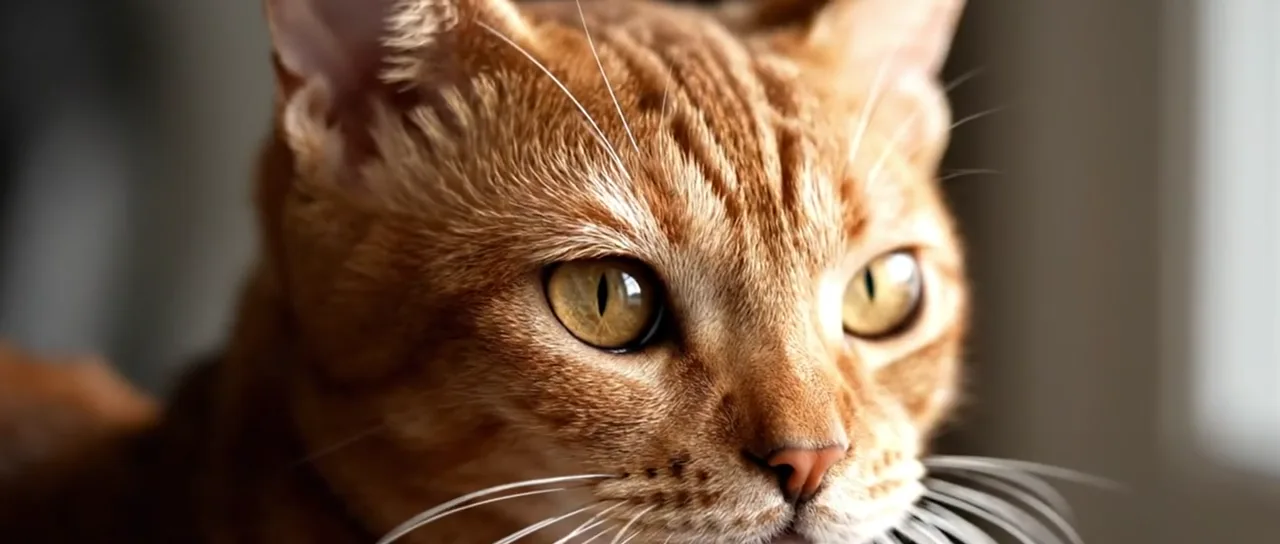
Orange color and tabby pattern are different features
The orange describes pigment; tabby describes markings such as stripes or swirls. A shelter description may combine these features with coat length, for example orange tabby domestic shorthair. That description is not proof of a particular pedigree.
If breed matters to a decision, look for reliable ancestry information rather than identifying one from a color photograph. Many ordinary domestic cats share attractive coat patterns with recognized breeds.
What researchers found about orange coloring
In research published in 2025, scientists identified a regulatory change associated with the gene ARHGAP36 that helps explain sex-linked orange coloring in domestic cats. The finding concerns pigment biology. It does not establish that orange cats are less intelligent or share a particular personality. [1]
Why more orange cats are male
In the usual XX and XY inheritance pattern, a male needs an orange-associated variant on its single X chromosome to show orange coloring. An entirely orange female generally needs the relevant inheritance on both X chromosomes. Females with different orange and non-orange inheritance can show tortoiseshell or calico patterns through X-chromosome inactivation. [1]
This explains the direction of the difference, but it does not justify an exact percentage for every cat population. Claims such as all orange cats are male are incorrect. If a cat’s sex is uncertain, ask a veterinary professional rather than deciding from coat color.
Are orange tabby cats friendlier or more mischievous
Social-media stereotypes are not a dependable way to choose a cat. AAHA’s discussion of color and behavior emphasizes individual variation and the risk of owner expectations shaping what people notice. Evidence has not established a simple coat-color rule that predicts a cat’s personality. [2]
Meet the animal and ask about actual behavior. Does the cat seek contact, tolerate a household’s activity, use a scratching surface and settle comfortably? What does the foster carer know about interactions with children or other animals? These observations are more useful than an orange-cat meme.
Choosing and caring for an orange tabby
| Decision | Useful information to obtain |
|---|---|
| Adoption fit | Observed behavior and household history |
| Feeding | Life stage body condition and current diet |
| Health | Records current concerns and veterinary recommendations |
| Grooming | Coat length matting tendency and handling comfort |
| Home setup | Safe resting places litter resources play and gradual introductions |
A color label does not provide a medical history. Request vaccination and treatment records where available, and arrange an appropriate veterinary visit. Explain any appetite, drinking, weight, mobility or litter-box changes rather than attributing them to the cat’s personality.
Long-haired orange cats may need a different grooming routine from short-haired cats. Base handling on the actual coat and the cat’s tolerance. A cat that resists grooming may need help with pain, mats or a gradual training plan instead of firmer restraint.
What does an orange tabby cost
There is no single meaningful national price for a color description. Adoption fees, pedigree status, local availability and included veterinary care differ. Ask for a written breakdown rather than paying more because a seller claims the color guarantees an unusual temperament.
Budget for continuing food, litter, preventive care, grooming needs and unexpected medical costs. The initial fee is only one part of caring for the animal.
Meet the cat and ask about observed behavior rather than choosing from a coat-color stereotype.
Common questions
Is an orange tabby a breed
No. It is a description of coat color and markings. Different breeds and mixed-ancestry cats can have that appearance.
Can orange tabby cats be female
Yes. Sex-linked inheritance makes orange males more common, but orange females are possible.
Are orange cats less intelligent
The coat-color research does not establish that claim. Judge learning and behavior in the individual cat.
Do all orange cats have the same personality
No. History, environment, health and individual variation matter.
How long do orange tabby cats live
Coat color alone cannot predict an individual lifespan. Discuss health and care based on the actual cat.
Does the ARHGAP36 finding prove a behavior difference
No. A finding about pigmentation is not evidence that a specific personality stereotype is true.