Portuguese Man of War Identification and Sting Safety
A Portuguese man-of-war is a floating marine animal with a balloon-like blue, pink or violet float and long stinging tentacles. Although often called a jellyfish, it is a siphonophore: a colony of specialized units working together. Do not touch one in the water or on the beach. Stranded animals and detached tentacles can still sting. [1]
If someone has been stung, get out of the water safely and seek help from a lifeguard or local medical professional. Breathing difficulty, collapse or a severe generalized reaction requires emergency help.
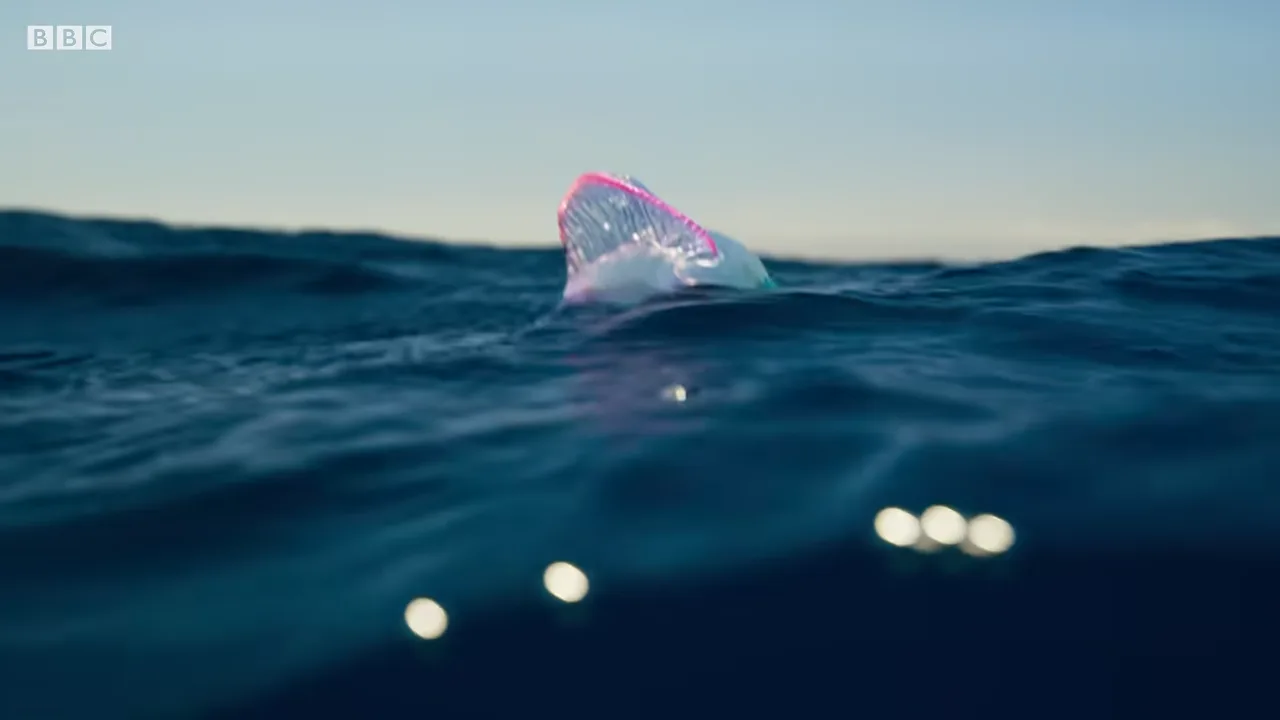
How to recognize a possible man of war
The visible float sits at the surface while tentacles trail below. The floating portion does not reveal how far the tentacles extend, so keep your distance rather than approaching to inspect it. NOAA describes tentacles that can reach many feet beyond the float. [1]
A photograph can help document an encounter from a safe distance, but do not pick up the animal for a clearer image. Beach signs and lifeguard advice are more useful than deciding that a stranded specimen looks old or dry.
Is it one animal or a colony
The colony consists of genetically related specialized units with different jobs, including floating, capturing prey, feeding and reproduction. The units depend on the functioning colony. This is why a man-of-war is described differently from a true jellyfish. [1]
The practical safety message is unchanged by the terminology. Stinging structures on the tentacles can discharge on contact, including after material has washed ashore. A pet or child does not need to encounter a swimming animal to be exposed.
What to do after a person is stung
The American Red Cross general jellyfish-sting guidance advises getting the person out of the water, carefully removing tentacles with protection and using non-scalding hot water for pain relief. Local advice and species identification should guide the response. [2]
- Move away from the animal and get safely out of the water.
- Ask a lifeguard or first aider for help and identify the suspected animal if possible.
- Avoid touching attached tentacles with bare hands.
- Follow local instructions for removal and first aid.
- Obtain medical help for severe pain, extensive exposure or concerning symptoms.
Do not rub the area, use urine or experiment with a mixture of household chemicals. Do not let another person become stung while trying to help.
Why vinegar advice can conflict
Different resources, species and regional protocols have given different advice about vinegar. A generic jellyfish rule may not apply to every encounter. This article therefore does not prescribe vinegar as a universal step or claim that every source agrees. Ask the local lifeguard or medical service which protocol applies. [2][3]
Hot-water guidance also requires care: it must not burn the person. Someone with reduced sensation or difficulty communicating discomfort needs particular caution. Professional help is preferable to improvising from a beachside search result.
If a dog encounters one
Keep the dog away from the animal and prevent further licking, biting or contact. Contact a veterinarian promptly, especially after mouth exposure, visible pain or any breathing or general illness signs. Human first-aid guidance is not a dog-treatment protocol.
Avoid handling tentacles with bare hands, and do not allow the dog to investigate the washed-up animal while you take a photograph. Tell the vet where the contact occurred, when it happened and which body areas may be involved. Follow its instructions about travel and immediate care.
Reducing exposure at the beach
Read current signs and ask about local conditions before entering the water. If man-of-war colonies are reported, choose a different activity or beach area according to local advice. Keep pets under control and children away from unfamiliar stranded marine life.
Do not assume calm surf, a small float or the absence of nearby swimmers makes the situation safe. Winds and currents influence where colonies and tentacles are found. [1]
Check the local beach warnings and veterinary emergency contact before taking a dog to the shore.
Common questions
Is a Portuguese man of war a jellyfish
It is closely related to jellyfish but is classified as a siphonophore colony rather than a true jellyfish.
Can a dead or washed up man of war sting
Yes. Keep away from stranded animals and detached tentacles.
Should I put vinegar on a sting
Follow local species-specific professional advice. Published guidance is not uniform enough to treat vinegar as a universal rule.
Can I touch the float if I avoid the tentacles
Do not handle the animal. Tentacles may be difficult to see and can remain hazardous.
What if my dog bites one
Contact a veterinarian promptly and prevent further contact. Do not apply a human first-aid recipe to the dog’s mouth.